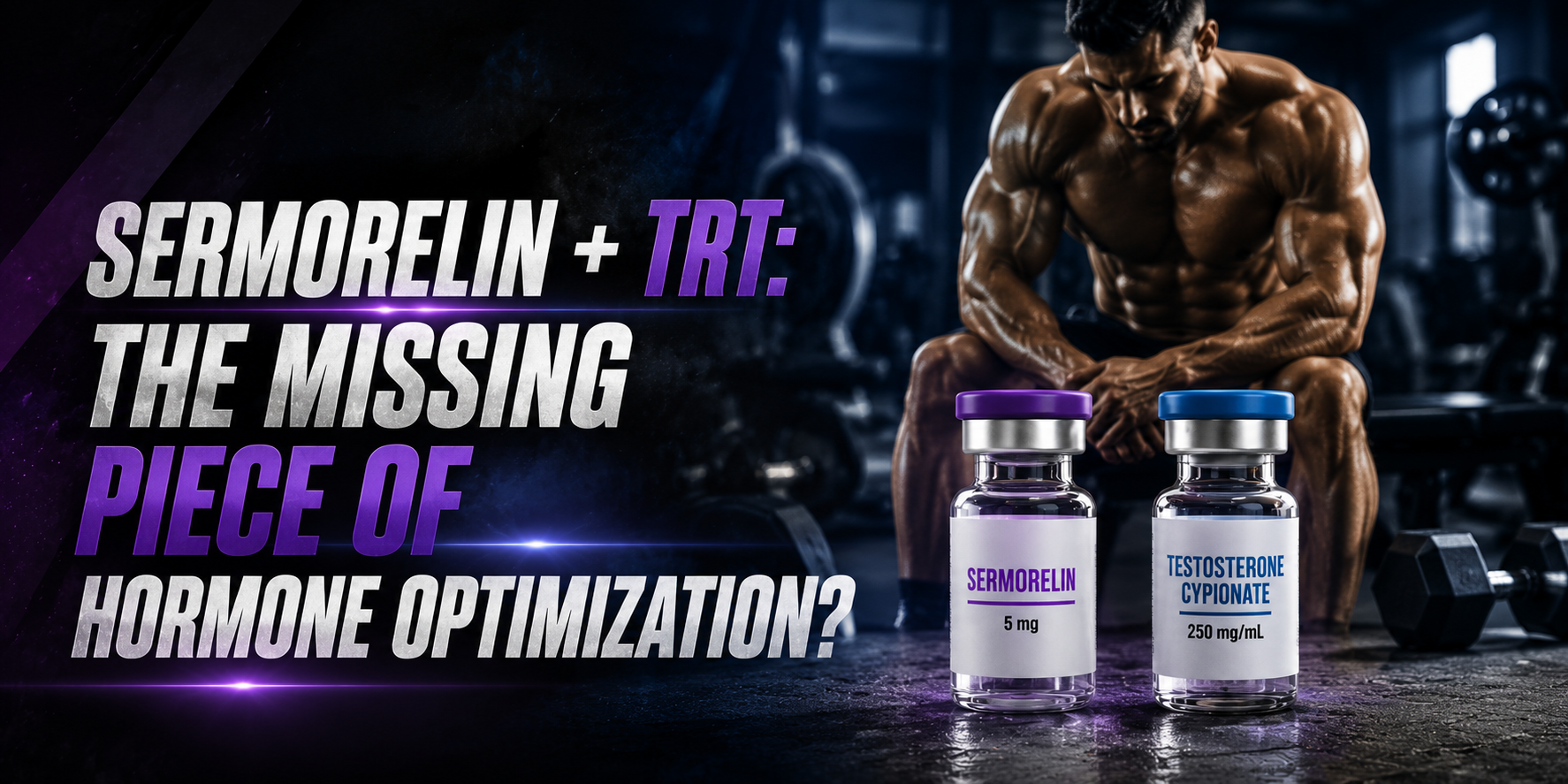
 For many men, testosterone replacement therapy (TRT) significantly improves energy, strength, libido, and overall well-being. Yet despite successful treatment, some continue to struggle with poor sleep, slow recovery, stubborn body fat, or persistent fatigue.
These lingering symptoms often leave patients wondering why they still don't feel their best.
The answer may lie beyond testosterone alone.
As men age, testosterone isn't the only hormone that naturally declines. Growth hormone production also decreases over time, affecting many of the same physiological systems responsible for recovery, metabolism, sleep, and body composition. While TRT addresses testosterone deficiency, it doesn't directly restore growth hormone signaling.
This is one reason some hormone specialists consider combining TRT with sermorelin. Rather than simply adding another medication, the goal is to support two interconnected hormonal pathways that work together to maintain overall health and performance.
Understanding why this combination is sometimes recommended—and separating medical science from common misconceptions—can help patients make more informed decisions about their care.
What Are TRT and Sermorelin?
Although they're often discussed together, TRT and sermorelin serve very different purposes.
Testosterone replacement therapy is designed to restore healthy testosterone levels in men whose bodies no longer produce enough of the hormone naturally. Low testosterone can result from aging, metabolic conditions, chronic stress, poor sleep, certain medical conditions, or dysfunction within the hormonal system.
Symptoms commonly include:
- Fatigue
- Reduced muscle mass and strength
- Increased body fat
- Lower libido
- Mood changes
- Decreased exercise recovery
By restoring testosterone to an appropriate physiological range, TRT helps improve many of these symptoms and supports long-term hormone balance.
Sermorelin works through an entirely different mechanism.
Rather than supplying growth hormone directly, sermorelin stimulates the pituitary gland to produce and release your body's own natural growth hormone. Because it encourages your body's existing hormone production instead of replacing it, sermorelin functions very differently from synthetic human growth hormone (HGH).
This distinction is one of the most important concepts for patients to understand.
Why Growth Hormone Matters
Growth hormone is released naturally throughout the day, with its largest release occurring during deep, restorative sleep.
As we age, production gradually declines in a normal biological process often referred to as age-related growth hormone decline. This reduction commonly occurs alongside falling testosterone levels, meaning many men experience changes in both hormone systems at the same time.
While testosterone replacement addresses one part of this equation, declining growth hormone activity may continue to affect sleep quality, recovery, metabolism, and body composition.
For some men, this explains why TRT alone improves many symptoms but doesn't completely restore how they expected to feel.
Why Some Providers Combine TRT With Sermorelin
The goal of combining TRT with sermorelin isn't simply to increase hormone levels.
Instead, the strategy focuses on supporting two different hormonal systems that perform complementary functions throughout the body.
Testosterone plays an important role in:
- Building and maintaining muscle
- Supporting bone density
- Promoting healthy red blood cell production
- Maintaining libido
- Supporting mood and cognitive performance
- Improving metabolic function
Growth hormone, however, contributes to several areas that testosterone doesn't directly regulate to the same extent.
These include:
- Deep sleep quality
- Cellular repair
- Connective tissue recovery
- Fat metabolism
- Overnight recovery processes
Because these systems work together, restoring testosterone alone may leave some men with ongoing symptoms that stem from declining growth hormone activity rather than inadequate testosterone.
For patients experiencing both deficiencies, addressing both pathways may provide a more complete approach to hormone optimization.
When TRT Alone Doesn't Feel Like Enough
Many men notice meaningful improvements after beginning TRT but eventually reach a point where progress slows.
They may experience:
- Better testosterone levels but persistent fatigue
- Improved strength with slow recovery
- Continued difficulty losing abdominal fat
- Poor-quality sleep despite healthy habits
- Ongoing joint discomfort
- Feeling better—but not fully optimized
These lingering symptoms aren't always caused by testosterone deficiency.
In some cases, reduced growth hormone signaling may be contributing to the problem.
Supporting both hormonal systems allows clinicians to evaluate whether persistent symptoms reflect a broader hormone imbalance rather than a need for higher testosterone doses.
The objective isn't maximizing hormones—it's restoring healthier physiological balance.
Common Misconceptions About Sermorelin
One of the biggest sources of confusion is the belief that sermorelin and human growth hormone injections are essentially the same treatment.
They're not.
Traditional HGH therapy delivers synthetic growth hormone directly into the bloodstream.
Sermorelin works differently by stimulating the pituitary gland to release growth hormone through the body's own natural regulatory system. Because natural feedback mechanisms remain intact, the body's hormone production continues to be self-regulated rather than bypassed entirely.
This difference influences both how the therapy works and how healthcare providers monitor treatment.
Another misconception involves expectations.
Some patients expect rapid transformations after beginning both therapies.
While TRT may improve energy and libido relatively early for some individuals, meaningful improvements in body composition, sleep quality, recovery, and overall performance generally develop gradually over several months.
Sermorelin often requires even greater patience because it supports hormone signaling rather than replacing hormones directly.
Long-term consistency—not immediate results—is what typically produces the greatest benefits.
How the Combination Supports Multiple Body Systems
Looking at TRT and sermorelin from a whole-body perspective helps explain why some clinicians recommend combining them.
Sleep
Deep sleep is one of the body's most important periods for recovery.
Growth hormone is naturally released during slow-wave sleep, where it supports tissue repair, cellular regeneration, and metabolic recovery.
Reduced growth hormone activity may contribute to fragmented sleep and feeling unrefreshed despite spending enough hours in bed.
Supporting natural growth hormone release may improve recovery by enhancing these overnight repair processes.
Recovery and Exercise Performance
Muscle recovery extends beyond testosterone alone.
Growth hormone contributes to connective tissue repair, post-workout recovery, and physiological adaptation following resistance training.
Men who consistently exercise but continue experiencing unusually slow recovery may have more than one hormonal pathway contributing to their symptoms.
Supporting both testosterone and growth hormone signaling may help improve overall recovery capacity.
Body Composition
Testosterone helps preserve lean muscle mass and supports healthy body composition.
Growth hormone also plays an important role by influencing:
- Fat metabolism
- Insulin sensitivity
- Lipid regulation
- Visceral fat reduction
For some men, persistent abdominal fat despite successful TRT may reflect reduced growth hormone activity rather than inadequate testosterone replacement.
Energy and Mental Performance
Healthy testosterone and growth hormone function both contribute to:
- Daily energy
- Mental focus
- Motivation
- Emotional well-being
Many patients describe feeling more mentally refreshed and physically resilient when both hormonal systems are functioning optimally.
Who May Benefit From This Combination?
Not every patient receiving TRT needs sermorelin.
However, discussing the combination with an experienced healthcare provider may be appropriate for men who continue experiencing symptoms such as:
- Poor sleep despite adequate sleep duration
- Slow recovery after exercise
- Persistent fatigue
- Difficulty improving body composition
- Reduced mental clarity
- Limited progress despite well-managed TRT
Age, medical history, symptoms, laboratory findings, and overall health all influence whether this approach is appropriate.
Who Should Avoid Sermorelin?
Like any hormone-related therapy, sermorelin isn't suitable for everyone.
It may not be appropriate for individuals with:
- Active or previous hormone-sensitive cancers
- Untreated obstructive sleep apnea
- Certain pituitary disorders
- Specific metabolic conditions
- A history of intracranial hypertension
Because every patient's medical history is different, treatment decisions should always be made with a qualified healthcare provider.
Self-prescribing or purchasing hormone-related medications from unregulated sources can expose patients to unnecessary health risks and should be avoided.
What a Well-Managed TRT and Sermorelin Treatment Plan Looks Like
When considering a combination of testosterone replacement therapy (TRT) and sermorelin, the goal should never be to simply add another medication. Effective hormone optimization requires careful evaluation, thoughtful planning, and ongoing monitoring to ensure each therapy is appropriate for the individual.
A personalized approach helps healthcare providers understand how your body responds to treatment while minimizing unnecessary risks.
Building a Strong Foundation Before Adding Sermorelin
Every successful hormone treatment plan begins with a thorough evaluation.
Before introducing sermorelin, experienced clinicians typically perform a comprehensive assessment that includes:
- A detailed review of your symptoms
- Medical and lifestyle history
- Quality-of-life evaluation
- Comprehensive laboratory testing
Rather than focusing only on testosterone levels, providers often evaluate additional health markers such as thyroid function, metabolic health, and other hormone-related indicators to gain a more complete picture of your overall health.
This broader assessment helps determine whether persistent symptoms are truly related to hormone deficiencies or whether other factors may also be contributing.
Why Timing Matters
In many cases, TRT is first stabilized before sermorelin is introduced.
Allowing testosterone therapy to reach a steady state makes it easier to identify which improvements are coming from TRT and which changes occur after adding sermorelin.
Introducing treatments gradually also allows clinicians to adjust one variable at a time, making it easier to evaluate progress and manage any side effects that may arise.
This step-by-step approach isn't about slowing treatment—it helps ensure that each decision is based on accurate clinical information rather than guesswork.
Ongoing Monitoring Is About More Than Lab Results
Hormone optimization doesn't end once treatment begins.
Regular follow-up appointments allow healthcare providers to monitor both laboratory values and real-world improvements.
Blood work remains an important part of treatment, but numbers alone rarely tell the complete story.
Experienced providers also ask questions such as:
- Are you sleeping better?
- Has your recovery after exercise improved?
- Are your energy levels more consistent?
- Is body composition gradually changing?
- Do you feel healthier overall?
These day-to-day improvements often provide just as much insight as laboratory measurements when determining whether a treatment plan is working effectively.
The most successful protocols combine objective testing with ongoing evaluation of how patients actually feel and function.
Monitoring Safety Throughout Treatment
Like any medical therapy, both TRT and sermorelin require appropriate supervision.
For patients receiving testosterone replacement therapy, providers routinely monitor areas such as:
- Hematocrit
- Cardiovascular health
- Fertility considerations
- Testicular function
Sermorelin is generally well tolerated, but some individuals may experience temporary side effects, including:
- Mild injection-site irritation
- Water retention during the early stages of treatment
- Tingling sensations similar to carpal tunnel symptoms
- Changes in fasting blood sugar
These effects are often manageable with appropriate dosing adjustments and regular follow-up.
Having an experienced healthcare provider oversee treatment helps identify concerns early and make changes when necessary.
Why Quality Matters
Sermorelin is commonly prepared through specialized compounding pharmacies rather than manufactured as a standard commercial medication.
Because of this, the quality of the pharmacy plays a significant role in treatment safety and effectiveness.
Accredited compounding pharmacies follow strict standards for sterility, quality control, and product testing.
Obtaining compounded peptides from unverified online sellers or unofficial sources increases the risk of contamination, inaccurate dosing, and poor product quality.
Choosing a reputable healthcare provider helps ensure that medications come from trusted pharmacies that meet established safety standards.
What Successful Treatment Really Looks Like
Success with TRT and sermorelin isn't defined by achieving the highest possible hormone levels.
Instead, the goal is meaningful improvement in overall health and quality of life.
Many patients describe success as:
- Waking up feeling refreshed
- Improved mental clarity
- Better exercise recovery
- Steady energy throughout the day
- Gradual improvements in body composition
- Stable mood
- Healthy libido
- Less joint discomfort
- Greater overall vitality
These improvements typically develop gradually rather than overnight.
Most men notice meaningful progress over several months, with continued improvements occurring as treatment, healthy habits, and consistent monitoring work together.
Patience is an important part of the process.
Healthy Habits Still Matter
Even the most carefully designed hormone protocol cannot replace the fundamentals of good health.
Lifestyle choices continue to play a major role in treatment outcomes.
Poor sleep can reduce natural growth hormone release, limiting many of the benefits sermorelin is intended to support.
Excessive alcohol consumption may interfere with hormone regulation, reduce sleep quality, and negatively affect testosterone function.
Chronic stress can elevate cortisol, creating an internal environment that works against both testosterone and growth hormone activity.
At the same time, healthy habits can significantly enhance the effectiveness of treatment.
Regular resistance training provides the stimulus that supports muscle growth and recovery, while balanced nutrition—including adequate protein intake and appropriate calorie consumption—gives the body the resources it needs to respond to therapy.
Hormone treatment should be viewed as one part of a comprehensive health strategy rather than a replacement for healthy living.
The Importance of Understanding the Bigger Picture
For many patients, the combination of TRT and sermorelin is unfamiliar, and it's not always explained in sufficient detail.
Because hormone therapy can be complex, consultations sometimes focus on prescriptions and laboratory numbers rather than helping patients understand how different hormonal systems work together.
When appropriate, combining TRT with sermorelin isn't about chasing higher hormone levels or following the latest wellness trend.
Instead, it's an evidence-informed strategy aimed at supporting two interconnected hormonal pathways that naturally decline with age and influence many aspects of health, including sleep, recovery, body composition, and overall vitality.
Successful treatment requires individualized evaluation, ongoing monitoring, realistic expectations, and open communication between patient and provider.
At Etalaze, we believe hormone optimization begins with education. Every treatment plan should be built around the individual—not just their lab results. By combining careful assessment, personalized care, and long-term follow-up, patients can better understand their options and make informed decisions that support lasting health and well-being.
Was this article helpful?
That’s Great!
Thank you for your feedback
Sorry! We couldn't be helpful
Thank you for your feedback
Feedback sent
We appreciate your effort and will try to fix the article